Community-based recycling can play an important role in reducing waste, conserving resources, and creating cleaner neighborhoods. When residents have convenient access to local recycling programs, understand what can be recycled, and feel connected to local environmental efforts, recycling participation can increase significantly. Well-designed community recycling programs combine practical collection services with education, communication, and community involvement. Through community recycling initiatives, local recycling initiatives, and consistent recycling awareness, neighborhoods can develop stronger habits that support sustainable communities. These efforts can become an important part of broader waste management programs, community waste management, and long-term environmental planning.
What Is Community-Based Recycling?
Community-based recycling is an approach to waste reduction in which local residents, organizations, businesses, schools, and public authorities work together to improve recycling and resource recovery.
Instead of treating recycling as an individual responsibility alone, this approach makes it a shared community activity.
A successful program may include household collection, neighborhood drop-off locations, recycling events, school education, public information campaigns, and partnerships with local businesses.
The main idea is simple: make recycling easier, clearer, and more relevant to the people who are expected to participate.
When residents see recycling as part of their neighborhood culture rather than an isolated household chore, participation can become more consistent.
Why Recycling Participation Matters
Recycling systems can only work effectively when people actually use them correctly.
A community may have collection trucks, recycling containers, processing facilities, and public information resources, but these investments have limited impact if residents do not participate.
Low participation can result from several factors, including:
- Lack of convenient collection services
- Confusion about recyclable materials
- Limited awareness
- Poor communication
- Lack of trust in the recycling system
- Inconvenient drop-off locations
- Unclear collection schedules
- Contamination caused by incorrect disposal
This is why increasing recycling participation requires more than simply distributing recycling bins.
Communities need to understand the practical and social reasons behind residents’ behavior and create systems that make correct recycling easier.
How Local Recycling Programs Increase Participation
One of the most important questions for environmental planners is how local recycling programs increase participation.
The answer involves convenience, education, communication, accessibility, and community involvement.
When recycling services are available close to where people live, residents are less likely to see recycling as inconvenient.
Clear instructions also reduce uncertainty. If people know exactly what belongs in a recycling container, they can make better decisions.
Local programs can also use community-specific communication. A neighborhood campaign can address the actual waste patterns, housing types, and challenges experienced by local residents.
This makes local solutions for increasing recycling more practical than relying exclusively on broad, generalized messaging.
Benefits of Community Recycling Programs
There are many benefits of community recycling programs, both environmental and social.
Reduced Waste
Recycling can divert suitable materials from disposal facilities and give certain materials another use.
Resource Conservation
Recovering materials such as paper, metals, glass, and some plastics can reduce demand for virgin resources.
Cleaner Neighborhoods
Organized recycling services can help reduce litter and encourage residents to think more carefully about waste.
Environmental Awareness
Local recycling activities provide opportunities to educate people about consumption, waste, and resource conservation.
Community Participation
Recycling programs can bring residents together around a shared environmental objective.
Economic Opportunities
Depending on local conditions, recycling systems can support collection, sorting, processing, repair, reuse, and related activities.
These benefits make recycling more than a waste-disposal strategy. It can become part of a broader approach to sustainable waste management.
The Role of Recycling Awareness
Recycling awareness is essential because people cannot consistently follow recycling rules they do not understand.
Many recycling mistakes occur because residents are unsure whether a particular item belongs in the recycling bin.
For example, packaging may look recyclable but require special handling. Food residue can also create problems for certain recycling streams.
Rather than assuming that residents already understand these details, community recycling programs should communicate simple, specific instructions.
Information should answer practical questions such as:
- What materials can be recycled?
- What materials should stay out?
- Should containers be rinsed?
- Where should special materials go?
- When is collection day?
- What should residents do with large items?
- How can residents report problems?
The simpler the information, the easier it is for people to act on it.
How Recycling Education Increases Participation
How recycling education increases participation is closely connected to reducing confusion.
Education does not need to be complicated. A short flyer, poster, social media message, school activity, or neighborhood workshop can communicate useful information.
Schools can introduce children to recycling concepts through classroom activities and practical sorting exercises.
Libraries and community centers can host environmental workshops.
Apartment communities can place recycling instructions near collection areas.
Local authorities can publish visual guides showing accepted and unacceptable materials.
These approaches make recycling education part of everyday life instead of treating it as a once-a-year awareness campaign.
Neighborhood Recycling: Bringing Programs Closer to Residents
Neighborhood recycling can make participation more convenient by placing services where residents already spend time.
A neighborhood may establish designated collection points at community centers, schools, apartment complexes, or other suitable locations.
Community events can also provide temporary collection opportunities for materials that are not part of regular household recycling.
The closer and easier the service is, the fewer practical barriers residents face.
Convenience is particularly important for people who do not have private vehicles, live in apartments, or have limited storage space.
This demonstrates why ways to increase recycling participation should consider the everyday circumstances of residents rather than focusing only on awareness.
Community Recycling Programs for Apartment Buildings
Apartment communities can face different recycling challenges from detached homes.
Residents may share collection areas, have limited storage space, or move frequently.
Building managers can support recycling by:
- Providing clearly labeled containers
- Posting simple recycling instructions
- Keeping collection areas clean
- Communicating collection schedules
- Organizing occasional recycling education sessions
- Monitoring contamination
- Making recycling bins easy to find
These measures can turn apartment complexes into effective examples of community-based recycling programs.
Property managers can also communicate directly with residents when recycling rules change.
Schools as Recycling Education Centers
Schools are powerful locations for community recycling initiatives because students can influence household behavior.
A school recycling project might involve waste-sorting activities, classroom competitions, recycling audits, composting demonstrations, or environmental clubs.
Students can learn how waste is generated, where it goes, and how consumption choices influence the environment.
Children can also take lessons home.
When students explain recycling rules to parents or encourage families to separate waste, environmental education can extend beyond the classroom.
This makes schools valuable partners in environmental community programs.
How Communities Can Improve Recycling
There is no single solution for every neighborhood. How communities can improve recycling depends on local infrastructure, population density, housing patterns, waste composition, and available resources.
However, several strategies can work across many communities.
1. Make Recycling Convenient
Convenient collection services can remove one of the biggest barriers to participation.
2. Simplify Recycling Instructions
Residents should not have to interpret complicated technical language.
3. Provide Consistent Communication
Messages should be repeated through multiple channels rather than shared only once.
4. Monitor Contamination
Programs can identify common recycling mistakes and adjust educational materials accordingly.
5. Partner With Local Organizations
Schools, businesses, nonprofits, community groups, and housing associations can expand the reach of recycling campaigns.
6. Celebrate Progress
Communities can share milestones and recognize residents who contribute to successful recycling efforts.
These strategies can support improving recycling rates through local programs over time.
Effective Local Recycling Initiatives
Effective local recycling initiatives usually have several characteristics in common.
First, they are easy to understand.
Second, they are convenient.
Third, they communicate regularly.
Fourth, they respond to local conditions.
For example, a neighborhood with many apartment buildings may need shared recycling stations and building-level education. A rural community may require strategically placed drop-off centers because door-to-door collection is less practical.
A school district might focus on student education and cafeteria waste, while a commercial area might concentrate on business recycling and packaging waste.
The best programs therefore avoid a one-size-fits-all approach.
How to Encourage Recycling in Communities
How to encourage recycling in communities involves creating positive reasons for residents to participate.
Messages that focus exclusively on environmental problems may not motivate everyone.
Programs can also highlight practical benefits, neighborhood cleanliness, community pride, and responsible resource use.
Local leaders can make recycling visible through public events and campaigns.
Community organizations can organize cleanup days followed by recycling education sessions.
Residents can be invited to suggest improvements to collection services.
When people feel that they have a voice in the system, they may be more willing to participate.
Community Recycling Participation Strategies
Strong community recycling participation strategies should combine several methods rather than depending on one campaign.
Door-to-Door Information
Simple educational materials can explain local recycling rules.
Digital Communication
Neighborhood websites, newsletters, social media pages, and messaging groups can provide reminders.
Public Signage
Clearly labeled recycling stations can reduce confusion in public areas.
Community Events
Recycling drives and environmental events can create opportunities for direct engagement.
School Programs
Children can learn recycling habits and share information with their families.
Local Partnerships
Businesses and community organizations can provide locations, resources, volunteers, and communication channels.
Together, these approaches can create stronger recycling engagement.
The Importance of Recycling Convenience
Even highly motivated residents may struggle to recycle when services are inconvenient.
Imagine a household that wants to recycle but has no collection service and must travel a long distance to a drop-off location.
The intention may exist, but the practical barrier remains.
This is why local recycling programs should consider accessibility when designing services.
Possible improvements include more collection points, better signage, predictable schedules, larger shared containers, and suitable services for apartment communities.
Convenience does not guarantee participation, but inconvenience can quickly discourage it.
Community Waste Management and Recycling
Community waste management is broader than recycling alone.
It may include waste reduction, reuse, composting, recycling, collection, processing, education, and responsible disposal.
A strong community program should therefore position recycling within a wider waste hierarchy.
Residents can be encouraged to reduce unnecessary purchases, reuse products when practical, repair damaged items, separate recyclable materials, compost suitable organic waste, and dispose of residual waste correctly.
This integrated approach supports sustainable waste management rather than treating recycling as the only environmental solution.
Public Recycling Programs and Trust
Public recycling programs need community trust.
If residents believe that their efforts do not matter or that collected materials are always discarded, participation can decline.
Transparency can help.
Local authorities can explain how materials are collected, sorted, processed, and transported.
Sharing realistic information is particularly important. Recycling systems face challenges, and acknowledging those challenges can be more credible than presenting recycling as effortless or perfect.
Communities can also publish progress reports, explain contamination problems, and describe improvements being made.
Trust can strengthen long-term recycling engagement.
Using Local Data to Improve Recycling
Data can help communities identify where improvement is needed.
Programs can monitor participation rates, contamination levels, collection volumes, and common materials found in waste streams.
For example, if a large percentage of contamination comes from food waste, educational campaigns can focus on keeping food out of recycling containers.
If participation is low in a particular neighborhood, program managers can investigate whether collection access, communication, or housing conditions are contributing to the problem.
This makes recycling policy more targeted and supports improving recycling rates through local programs.
Building Successful Community Recycling Programs
Building successful community recycling programs requires planning before implementation.
A community can begin by identifying its current waste challenges.
Next, program managers can determine which materials are suitable for collection and what infrastructure is available.
Residents should receive clear instructions before the program begins.
After launch, participation and contamination can be monitored.
Feedback can then be used to improve the system.
A useful cycle looks like this:
Assess → Plan → Educate → Implement → Measure → Improve
This process allows programs to evolve rather than remaining fixed even when community needs change.
Making Recycling More Inclusive
Effective community recycling initiatives should consider different groups within a neighborhood.
Older residents, renters, families, people with disabilities, students, businesses, and residents with limited transportation may experience different barriers.
Information should therefore be available through multiple formats.
Large, readable signage can help improve accessibility. Digital information can support residents who prefer online communication. Physical flyers may be more useful for people who do not regularly use social media.
Providing different access points makes local programs more inclusive.
The Social Power of Sustainable Communities
Recycling can contribute to the development of sustainable communities by encouraging residents to think collectively about environmental responsibility.
When neighbors see others separating waste, attending environmental events, or using recycling facilities correctly, sustainable behavior can become socially visible.
Community leaders can reinforce this culture by celebrating progress and highlighting local success stories.
Over time, recycling can become a normal part of neighborhood life rather than an optional activity.
This is one of the strongest long-term advantages of community-based recycling programs.
Technology and Local Recycling
Technology can support modern local recycling initiatives in several ways.
Mobile applications can provide collection schedules and recycling instructions. Websites can explain local rules. Digital maps can show nearby recycling locations.
Online reporting systems can allow residents to report overflowing bins or collection problems.
Some programs may also use data analysis to identify collection patterns and improve routes.
Technology should not replace community education, but it can make recycling information easier to access.
The Future of Community-Based Recycling
The future of community-based recycling will likely involve greater emphasis on convenience, education, local partnerships, data, and waste prevention.
Communities are increasingly recognizing that recycling is only one part of responsible resource management.
Future programs may combine recycling with composting, repair events, reuse centers, product take-back programs, and waste-reduction campaigns.
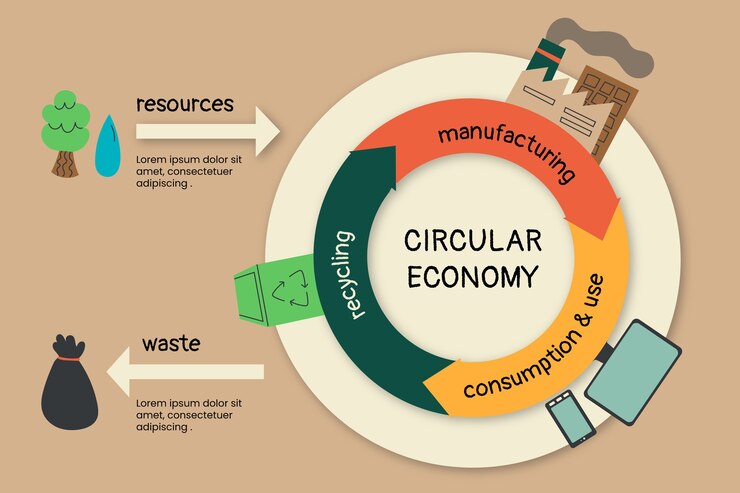
This broader approach can help communities move toward more circular systems in which materials remain useful for longer.
The strongest programs will likely be those that make sustainable behavior practical rather than simply asking residents to change their habits.
Conclusion
Community-based recycling provides a practical way for residents, organizations, businesses, schools, and local authorities to work together toward better waste management. Strong community recycling programs can improve participation by making recycling convenient, providing clear information, offering accessible services, and creating opportunities for residents to become actively involved.
From neighborhood recycling and recycling education to public recycling programs and broader environmental community programs, local action can have a meaningful effect on recycling behavior.
The most effective approach is not simply to tell people to recycle. Communities need to make the correct action easy, explain why it matters, listen to residents, and continuously improve their systems.
By combining education, accessibility, communication, local partnerships, and practical infrastructure, communities can develop stronger community recycling participation strategies and create lasting environmental habits.
Ultimately, recycling programs for sustainable communities are most successful when recycling becomes part of everyday community culture. When residents understand the system, trust it, and have convenient opportunities to participate, recycling can become a shared responsibility that supports cleaner neighborhoods, better resource management, and a more sustainable future.
About the Author