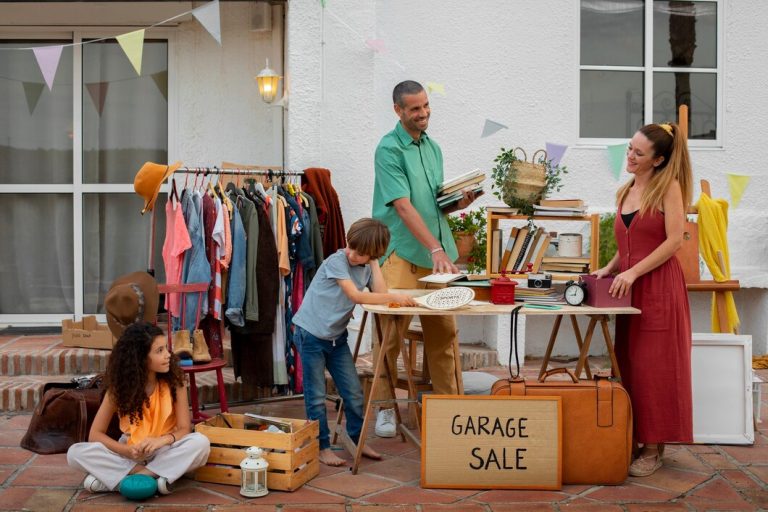
Did you know that modern “fast furniture” and “fast fashion” are often designed with a “failure point” of just two to three years? In the linear economy, obsolescence is a feature, not a bug. However, the secondary market is filled with “survivor assets”—items built during eras of high material standards or by manufacturers who prioritize repairability. The challenge for the circular consumer isn’t finding these items; it’s the quality assessment for second-hand goods. Without a rigorous inspection protocol, you risk importing someone else’s disposal problem into your home.
Inspecting used items is a foundational skill for anyone participating in the hyperlocal circular economy. By shifting your focus from “how it looks” to “how it’s built,” you can secure professional-grade goods for pennies on the dollar. This guide provides a definitive second-hand quality checklist, detailing how to check used electronics before buying, identifying the signs of quality in second-hand furniture, and revealing what to look for when buying used clothing to ensure every purchase is a long-term investment.
I. The “Survivor Bias” Strategy
We must value an item’s proven history over a new item’s unverified promise.
The Problem of the “Showroom Luster”
A high-quality second-hand item with a minor, repairable flaw is a superior resource to a brand-new, flawless item made from inferior materials.
In engineering, the “Bathtub Curve” suggests that most failures happen either very early in a product’s life or very late. A second-hand item has already survived the “early failure” phase. If a solid-wood table hasn’t warped or split in ten years, the wood is properly seasoned and stable. If an old-school mixer is still humming after a decade, its gears are likely metal, not plastic. When you perform a quality assessment for second-hand goods, you are verifying the item’s “technical maturity.” The linear model wants you to buy the “shiny and new”; the circular model wants you to buy the “proven and robust.”
Example: A consumer chooses between a new 200 dresser made of “wood-look” particle board and a used 50 dresser made of solid oak with a few surface scratches. Through inspecting used items, they verify that the oak dresser uses dovetail joints and real wood glides. They purchase the used item. The “flaw” (the scratches) is aesthetic and easily fixed with a light sand, but the “value” (the structural integrity) is permanent. The new dresser, meanwhile, is a “monstrous hybrid” that will be in a landfill in 36 months.
Therefore, inspecting used items is not about looking for “perfection”—it is about verifying “material excellence” and “structural honesty.”
II. Signs of Quality in Second-Hand Furniture
Furniture is the “heavy lift” of the circular economy. Use this furniture inspection tips checklist to find pieces that can be refinished and passed down.
1. The “Joinery” Inspection
- The Goal: Avoid staples and glue.
- What to Check: Pull out the drawers. Look for Dovetail joints (interlocking wedges). In chairs, look for mortise-and-tenon joints (a peg in a hole). If the piece is held together solely by staples or “cam locks” (the silver circles found in flat-pack furniture), it is a disposable item.
2. The “Substrate” Verification
- The Goal: Distinguish solid wood from “engineered” wood.
- What to Check: Look at the back or bottom of the piece where the wood is unfinished. If you see layers like a sandwich, it’s plywood (acceptable quality). If you see compressed “oatmeal” or sawdust, it’s MDF/Particle board (low quality). If the grain pattern on the front matches the grain pattern on the inside of the drawer, it’s solid wood.
3. The “Level and Square” Test
- What to Check: Place the piece on a flat surface. Does it wobble? Open every door and drawer. If they stick or hang unevenly, the frame may be warped—a difficult and often “circularly inefficient” repair.
III. How to Check Used Electronics Before Buying
Electronics represent the highest “embedded carbon” in our homes. Testing used electronics requires a systematic approach to avoid the “e-waste trap.”
1. The “Physical Integrity” Audit
- Port Health: Bring a portable battery and a cable. Test every USB, HDMI, and power port. Wiggle the cable; if the connection drops, the internal solder points are failing.
- The “Sniff” Test: Seriously. Smell the exhaust vents while the device is running. A “metallic” or “ozone” smell indicates failing capacitors or a motor that is about to burn out.
2. Battery and Screen Health
- For Laptops/Phones: Check the “Battery Cycle Count” in the system settings. Any battery over 500-800 cycles will likely need a 50-100 replacement soon.
- For Screens: Open a completely white image and a completely black image. This will reveal “dead pixels” or “burn-in” that are invisible during normal use.
3. The “Standardization” Factor
Check if the device uses standard cables (USB-C) and replaceable batteries. In a hyperlocal circular economy, avoid “closed-loop” proprietary electronics that cannot be repaired by a local shop.
IV. What to Look for When Buying Used Clothing
Textiles are the most common second-hand purchase. Use these textile quality markers to find garments that will survive another 100 washes.
- The Light Test: Hold the garment up to a bright light. If the weave looks “thin” or “patchy” (especially in the elbows or thighs), the fibers are breaking down.
- The “Pill” Potential: Rub the fabric against itself. If it immediately creates small “pills” or fuzz, it is a low-quality synthetic blend that will look aged very quickly.
- The Seam Stress Test: Gently pull on the seams. If you can see the thread “laddering” or if the fabric puckers, the tension was wrong during manufacturing, and the garment will eventually split.
- Natural Fiber Priority: Always check the care tag. Prioritize “biological nutrients”: 100% Wool, 100% Cotton, 100% Linen, or Silk.
V. The ROI of the Inspection: Risk vs. Reward
| Item Category | Potential “Lemon” Cost | Inspected “Gem” Value | Circular ROI |
| Furniture | 50 (Broken Frame) | 150 (Solid Wood) | 100.00 |
| Electronics | 200 (Dead Battery) | 400 (Functional) | 200.00 |
| Clothing | 20 (Unwearable) | 80 (Designer/Wool) | 60.00 |
- The “Repair Tax”: Always subtract the cost of professional repair from your offer price if you find a flaw during your quality assessment for second-hand items.
- Asset Appreciation: A solid-wood dresser bought for 50 and cleaned up is a “liquid asset” you can resell for 50-100 at any time. A new 200 particle-board dresser has 0 resale value.
VI. Why “Inspection” is an Act of Stewardship
In the circular economy, we are the gatekeepers of material quality. When we refuse to buy low-quality, “disposable” items on the second-hand market, we send a signal up the supply chain. We are saying that only durable, repairable goods have long-term value.
By mastering inspecting used items, you aren’t just “scoring a deal.” You are ensuring that the world’s limited resources are directed toward their highest and best use. You are validating the work of the craftsmen who built things to last and rejecting the “planned obsolescence” of the linear age.
Conclusion: Trust, but Verify
The secondary market is the world’s greatest warehouse, but it requires an expert eye. Quality assessment for second-hand goods is the key that turns a “risky purchase” into a “strategic acquisition.”
How to check used electronics before buying and identifying the signs of quality in second-hand furniture are skills that pay dividends for a lifetime. This weekend, when you find that “too good to be true” deal on a local marketplace, don’t just look at the price tag. Look at the joints, check the ports, and feel the fibers. Build a home out of things that were built to survive.
About the Author