The ability to store the abundance of a harvest or a bulk purchase is central to achieving a circular kitchen. In the linear system, when food is cheap and plentiful, it is often bought in excess and left to rot—the ultimate waste of resource investment. Without reliable food preservation methods, food waste is inevitable.
Mastering methods like canning food, freezing techniques, dehydrating, and fermenting is not a quaint hobby; it is a critical skill for food preservation to reduce waste. These techniques are the emergency brakes of the circular economy, allowing you to intercept food just before it spoils and lock its nutritional and economic value away for months or years. This guide explores the best methods for preserving food at home and shows you how to can freeze dehydrate food to maximize your food security and minimize your footprint.
I. The Critical Role of Preservation (The OREO Framework)
Food preservation directly counters the “use it or lose it” ultimatum of the linear consumption model.
Fighting the Spoilage Clock
Opinion: Any home without a dedicated food preservation strategy is financially vulnerable to seasonal price spikes and environmentally irresponsible regarding spoilage.
Reason: In the circular economy, resources must be kept at their highest value. Food is a resource with an extremely short lifespan. Preservation methods stop the biological process of decomposition, decoupling the food’s shelf life from its consumption date. This ensures that excess produce—often bought cheaply or harvested in bulk—is fully utilized instead of being a major food waste contributor.
Example: Mary buys 10 pounds of berries when they are on sale. If she leaves them in the fridge, 50% will mold within a week (total waste: 5 lbs). If she spends 30 minutes portioning and freezing them (freezing techniques), she successfully locks 100% of the value and nutrients into the freezer for up to a year. This small investment of time yields a massive return in savings and prevents the emission of methane gas from the landfill.
Opinion/Takeaway: Therefore, mastering multiple food storage methods is the foundational skill for food preservation to reduce waste, ensuring that peak nutritional and economic value is captured and held indefinitely.
II. The Core Preservation Techniques
These four methods offer a full range of food preservation solutions for every type of food and every part of the kitchen.
1. Freezing Techniques (The Easiest Brake)
- How it Works: Low temperatures stop microbial growth and slow chemical reactions, pausing spoilage.
- Best For: Most vegetables (blanched first), fruit, nuts, bread, and cooked leftovers.
- Circular Tip: Use durable, reusable containers (glass or silicone food bags) and label clearly with the date and contents to prevent “freezer burn” and subsequent waste.
2. Canning Food (The Longest Shelf Life)
- How it Works: Food is processed in sterilized, air-tight jars using heat (boiling water or pressure) to kill microorganisms and create a vacuum seal.
- Best For: High-acid foods (fruit, jams, pickles) with water bath canning; low-acid foods (vegetables, meat) with pressure canning.
- Circular Tip: Glass canning jars are endlessly reusable. Canning food is a zero-packaging, closed-loop storage solution that can last for years.
3. Dehydrating Food (The Lightest Storage)
- How it Works: Removing moisture (water activity) from food stops microbes from growing.
- Best For: Fruit (for snacks), herbs, jerky, and making vegetable powders for seasoning.
- Circular Tip: Dehydrated food takes up minimal space (critical for small homes) and is ideal for turning unusable, wrinkled produce (that might otherwise be thrown away) into shelf-stable, high-value snacks.
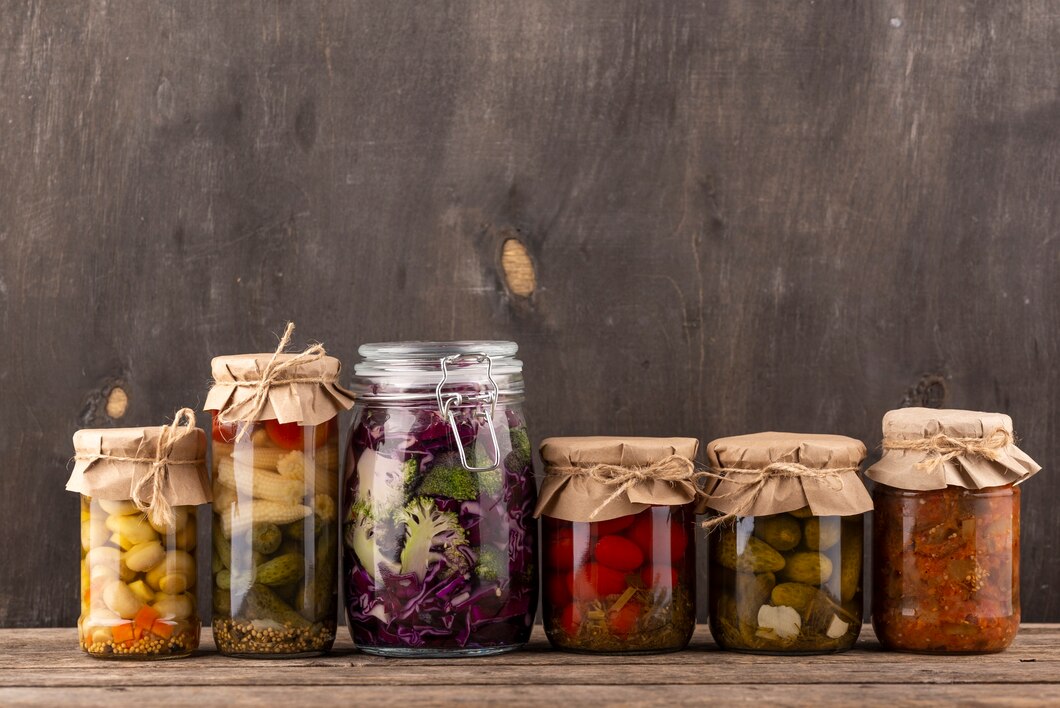
4. Fermenting Vegetables (The Gut Health Bonus)
- How it Works: Encouraging the growth of beneficial bacteria (like Lactobacillus) to convert sugars into organic acids (lactic acid), which acts as a natural preservative.
- Best For: Cabbage (sauerkraut), cucumbers (pickles), and many other vegetables (kimchi).
- Circular Tip: Fermentation requires minimal energy (no heat, no electricity) and uses common, reusable glass jars, making it one of the most energy-efficient best methods for preserving food at home.
III. How to Can Freeze Dehydrate Food: Planning Your Bulk Buy
Successful preservation requires anticipating the task before you buy the food.
1. The Timing is Key:
Only preserve food that is at its peak freshness and lowest cost (i.e., when it’s in season). Preserving wilted or damaged food results in poor quality output and wasted effort.
2. Batch Processing:
Preservation is most efficient when done in bulk. Dedicate a full day to canning food or an evening to prepping and loading the dehydrator. This saves energy and labor compared to small, sporadic batches.
3. The Scraps Strategy:
Use the leftover parts of the produce (cores, peels, seeds) from your preservation efforts for immediate consumption (e.g., using fruit peels for jams) or for composting, ensuring every biological nutrient is directed to its correct circular pathway.
IV. The Economic Case for Food Preservation
Beyond preventing the cost of waste, these food storage methods create economic resilience.
- Price Stabilization: Preservation allows you to buy food at its lowest seasonal price and consume it months later, effectively hedging against inflation and out-of-season cost spikes.
- Preparedness: A well-stocked pantry of canned or frozen goods is a powerful buffer against supply chain disruptions or sudden economic volatility, enhancing household self-sufficiency.
- Health Control: Preserving food at home gives you 100% control over salt, sugar, and preservatives, leading to healthier, cleaner food than most commercially processed options.
Conclusion: The Resilient Kitchen
The ultimate goal of the circular economy is not simply to recycle resources, but to ensure resource independence and resilience. Food preservation is the essential, time-tested skill that achieves this in the kitchen.
By mastering the various food preservation methods—from the simplicity of freezing techniques to the longevity of canning food—you transform your kitchen into a bastion of self-sufficiency. You turn perishable purchases into stable assets, effectively closing the loop on a resource that is too valuable to waste.
About the Author