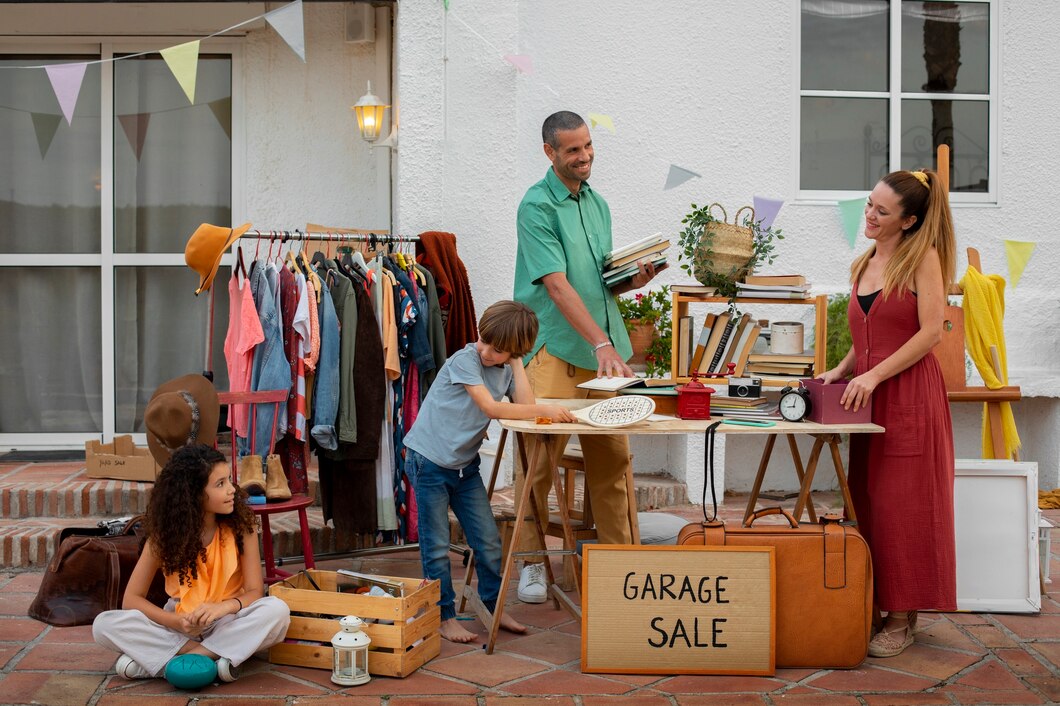
Did you know that the average person generates over 80 pounds of textile waste annually? Most of this waste isn’t “trash”—it is simply “misplaced inventory.” A sweater that no longer fits you or a book you’ve already read has zero utility in your closet, but it possesses 100% utility in the hands of a neighbor. In a linear economy, we “solve” clutter by dumping it at over-burdened thrift stores or, worse, sending it to a landfill. In a hyperlocal circular economy, we solve it through the “Swap.”
Hosting successful swap events is the most socially rewarding way to close the loop. By facilitating the direct exchange of goods, you eliminate the carbon cost of shipping and the financial barrier of retail. This guide provides a strategic roadmap for organizing a swap, detailing how to organize a successful clothing swap, offering legal and logistical tips for community swaps, and exploring creative themes for neighborhood swap events that turn waste reduction into a celebratory social experience.
I. Circulation vs. Dumping: The Swap Philosophy
We must move beyond the idea of “getting rid of stuff” and embrace the idea of “curating community resources.”
The Problem of the “Charity Bin” Default
Hosting a curated swap event is significantly more effective for local resource management than dropping items at a generic donation center.
When you drop items at a large-scale donation center, only about 20-25% of those items actually reach a sales floor; the rest are often bundled for textile recycling or shipped to the Global South, disrupting local economies. A community swap ensures that 100% of the “shoppage” stays within the local loop. It creates a “high-trust” environment where the history and quality of an item can be shared face-to-face. The linear model sees “disposal”; the circular model sees “redistribution.”
Example: A group of neighbors organizes a clothing swap. Instead of five bags of clothes going to a landfill-bound bin, 50 women exchange 200 items of high-quality apparel. The “leftovers” (the items no one wanted) are then strategically donated to a specific local women’s shelter. The community avoided the purchase of new clothes, built social ties, and ensured the highest-utility outcome for every garment.
Therefore, hosting swap events is the gold standard of circular activism—it empowers citizens to manage their own resource loops without relying on inefficient third-party intermediaries.
II. How to Organize a Successful Clothing Swap
Clothing swaps are the most popular entry point for community swap ideas, but they require strict logistical management to avoid turning into a “jumble sale.”
1. The “Quality Control” Rule
Set a clear standard for your clothing swap guide.
- Requirement: All items must be clean, odor-free, and in “giftable” condition (no holes or broken zippers).
- The Filter: Have a “check-in” station at the door where a volunteer briefly inspects items before they enter the swap floor.
2. The Token vs. Free-For-All System
- Token System: Participants get one “token” for every item they bring, which they can “spend” on new-to-them items. This is best for high-value designer swaps.
- Free-For-All: People bring what they have and take what they need. This is the most “circular” and inclusive approach, best for neighborhood groups.
3. Merchandising Matters
If items are piled in bags, they look like trash. If they are hung on racks or folded on tables with clear size signage, they look like a boutique.
III. Book Swap Logistics and Other Special Interest Swaps
While clothing is the most common, community swap ideas can be applied to any category of “technical nutrients.”
- The Book Swap: Use a “Genre Table” system (Fiction, Non-Fiction, Children’s). Encourage participants to tuck a small “review note” into the books they bring to add a personal touch to the exchange.
- The Toy Exchange: This is essential for families. Since children outgrow toys rapidly, a seasonal toy exchange event can save families hundreds of dollars while teaching children the values of the sharing economy.
- The Plant & Seed Swap: Perfect for spring. Neighbors bring cuttings, divided perennials, or surplus seeds. This is the “biological nutrient” loop in action.
IV. Legal and Logistical Tips for Community Swaps
To ensure your event runs smoothly, you must manage the “invisible” logistics.
- Venue Selection: Public libraries, community centers, or even a large driveway are ideal. If using a public space, check if you need a “Community Use” permit.
- The “Exit Strategy”: This is the most important rule of organizing a swap. You must have a plan for the items that remain at the end of the day.
- Pre-arrange Pickups: Contact local non-profits (shelters, school theaters, or textile recyclers) to pick up the remainders at a specific time.
- Pre-arrange Pickups: Contact local non-profits (shelters, school theaters, or textile recyclers) to pick up the remainders at a specific time.
- Communication: Use local Buy Nothing groups (Article ID 75) and platforms like Eventbrite to manage RSVPs and communicate the “Quality Standard” to participants.
V. Creative Themes for Neighborhood Swap Events
Themes help focus the inventory and increase the “fun factor,” which drives participation.
- The “Back to School” Swap: Focus on uniforms, backpacks, and supplies in late August.
- The “Holiday Decor” Swap: Held in early November (Article ID 71), allowing neighbors to refresh their seasonal look without buying new plastic.
- The “Kitchen Gadget” Swap: For the bread makers, air fryers, and pasta rollers that people bought but rarely use.
VI. The ROI of the Swap: Community Wealth Building
| Item Category | Average Value per Item | Items Exchanged (Est.) | Community Value Created |
| Clothing | 15.00 | 200 | 3,000.00 |
| Books | 10.00 | 100 | 1,000.00 |
| Toys/Games | 20.00 | 50 | 1,000.00 |
| Total Circular ROI | 5,000.00 |
- The “Cost of Admission”: Usually 0 or a small donation to the venue. The return on investment is effectively infinite.
- Waste Reduction: A typical 50-person swap can divert 300+ lbs of material from the waste stream in a single afternoon.
VII. Why “Swapping” is the Future of Consumerism
In a world of rising costs and environmental limits, the “Direct Peer-to-Peer Exchange” is the most resilient economic model we have. It bypasses the inflationary pressures of the retail market and the carbon pressures of the global supply chain.
By hosting swap events, you are building a “Resource Commons.” You are proving that we don’t need to produce more; we simply need to share better. You are turning your neighbors into your “supply chain” and your community into a thriving, self-sustaining ecosystem.
Conclusion: Let the Exchange Begin
The “waste” in your attic is the “wealth” of your neighborhood. Organizing a swap is the key that unlocks that value.
How to organize a successful clothing swap is a template that can be applied to every area of your life. By applying these legal and logistical tips for community swaps and exploring creative themes, you transform from a passive consumer into a community architect. This weekend, don’t go to the mall—go to the community center. Bring a bag, take a bag, and join the hyperlocal circular economy in action.
About the Author