The world’s clothing consumption has skyrocketed, making the fashion industry responsible for up to 10% of global carbon emissions—more than international flights and maritime shipping combined. The fundamental flaw is the linear model: Take (raw materials), Make (cheap, high-volume clothes), Wear (a few times), and Dispose.
The circular wardrobe is the definitive strategy for breaking this destructive cycle. It is a system built not on constant consumption, but on maximizing the lifespan of every textile through clothing rental, reuse, and deliberate reduction. This guide provides a complete roadmap for how to build circular economy wardrobe, detailing the power of second-hand clothing, the efficiency of the capsule wardrobe, and the future of circular fashion strategies at home.
I. The Material and Moral Cost of Fast Fashion (The OREO Framework)
Fast fashion deliberately externalizes its true costs onto the planet and the consumer’s wallet.
Perpetual Dissatisfaction
Opinion: Fast fashion doesn’t sell clothes; it sells a cycle of perpetual dissatisfaction that requires constant, resource-intensive repurchase.
Reason: By focusing on ultra-low prices, low durability, and rapid trend cycles, the linear model incentivizes disposal and emotional purchasing. The consumer’s wardrobe constantly overflows, yet they perpetually feel they have “nothing to wear” because the clothing is not designed for longevity or versatility, wasting billions in resources like cotton, water, and synthetic dyes.
Example: Anya buys a trendy, polyester-blend dress for $25. She wears it twice before the stitching comes undone. That dress is a piece of waste within two months, having contributed to plastic pollution (polyester microfibers) and waste streams. By contrast, if she puts that $25 toward a durable, classic second-hand clothing item, or uses a clothing rental service for a single event, the Cost Per Wear (CPW) plummets, and she avoids creating demand for new, low-quality production.
Opinion/Takeaway: Therefore, creating sustainable capsule wardrobe through circular methods is the only way to achieve true style and financial freedom from the material and psychological drain of the linear fashion system.
II. Strategy 1: The Capsule Wardrobe (Refuse & Reduce)
The capsule wardrobe is the circular method for the “Refuse” and “Reduce” principles. It focuses on intentionality and maximizing versatility.
Creating Sustainable Capsule Wardrobe
- Define Your Palette: Limit your core wardrobe to 30-40 items (excluding underwear, sleepwear, and gym clothes). Select a cohesive color palette (e.g., 2 core neutrals, 3 accent colors) so every top matches multiple bottoms.
- Focus on Quality: Shift your budget from buying many cheap items to buying a few high-quality, durable clothing items (e.g., 100% cotton, linen, merino wool) that are designed to last for years and are easily repaired.
- Audit and Declutter: Relentlessly remove items that are stained, ill-fitting, or have not been worn in a year. Ensure these discarded items are donated, sold, or recycled responsibly (not just tossed).
- Benefit: A capsule wardrobe reduces clutter, simplifies decision-making, and drastically cuts down on new consumption, which is the highest circular priority.
III. Strategy 2: Second-Hand Clothing (Reuse & Value Retention)
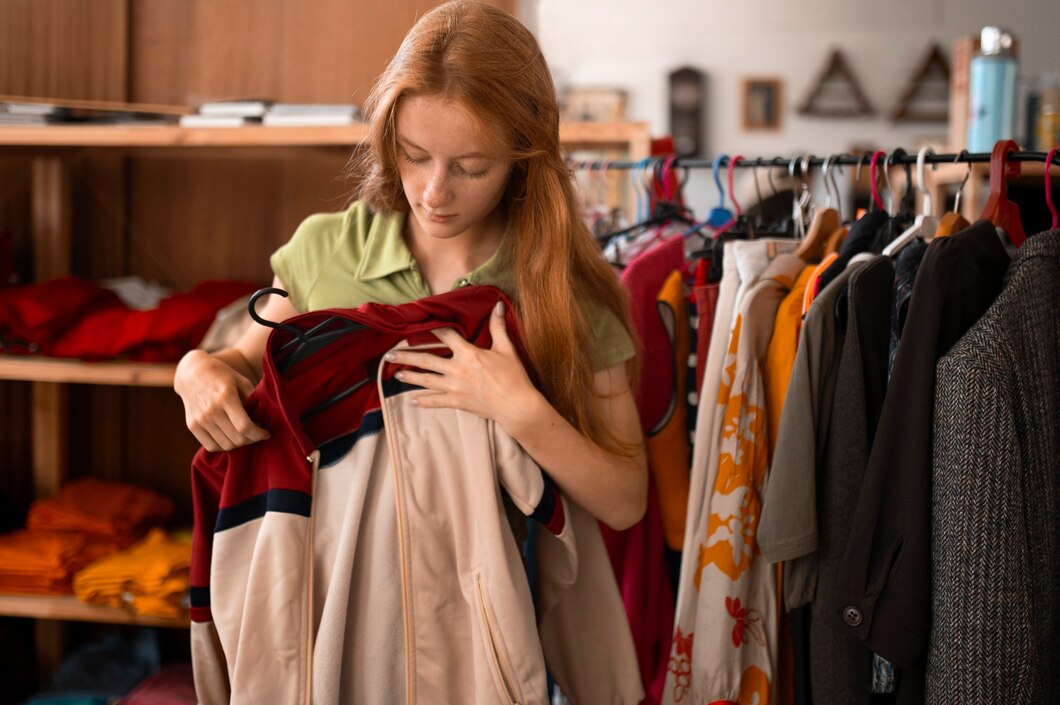
Buying second-hand clothing (thrift, consignment, resale apps) is the fastest and most accessible way to participate in the circular wardrobe.
Why Second-Hand is Superior
- Zero New Production: Every used garment purchased is one less new garment manufactured, conserving the massive amount of water and energy required for new textile creation.
- Material Purity: Thrifting often allows you to find older, better-made garments using higher-quality, purer materials (like true wool or pure cotton) that are now expensive to produce.
- Value Retention: You acquire a high-quality asset for a fraction of its original price, and if you keep it well, you can often resell it for what you paid, proving the material value has been retained.
The Circular Fashion Strategies at Home for Sourcing
- Sourcing Strategy: Shop with purpose. Bring a list of items and colors you need to fill gaps in your capsule wardrobe, avoiding impulse purchases.
- Inspection: Check all seams, zippers, and buttons. If an item needs minor clothing repair, consider its potential life extension after the fix.
- Swaps: Organize or attend clothing swap events to refresh your wardrobe without spending money, keeping items in active circulation.
IV. Strategy 3: Clothing Rental (The Product-as-a-Service Model)
For high-end or infrequent wear (e.g., weddings, formal events, maternity wear), clothing rental is the ultimate circular wardrobe strategy.
The Product-as-a-Service Advantage
- Access over Ownership: Rental focuses on access to the garment’s function (looking great for an event) without the material burden of long-term ownership.
- Maximizing CPW: The rental company maximizes the garment’s usage, ensuring its Cost Per Wear is spread across dozens of users, leading to the highest possible utilization of the textile resource.
- Circular Logistics: The rental company is incentivized to invest heavily in high-quality garment repair, cleaning, and refurbishment, as their entire business model depends on maintaining the asset’s longevity.
The Circularity Metric:
The goal of a sustainable wardrobe is to reduce your personal Material Consumption Footprint (MCF) for clothing to zero by exclusively using resources that are already in circulation (rental or second-hand).
Conclusion: Quality Over Quantity
How to build circular economy wardrobe is a matter of strategic choice: choosing durability over trendiness and utility over volume. The circular wardrobe is the most powerful personal resistance to the linear fashion machine.
By integrating the simplicity of a capsule wardrobe, the value of second-hand clothing, and the efficiency of clothing rental, you reduce your resource footprint, save money, and contribute to a resilient system where textile value is endlessly cherished. Start by defining your core colors and promising yourself that your next five purchases will be used or repaired, not new.
About the Author