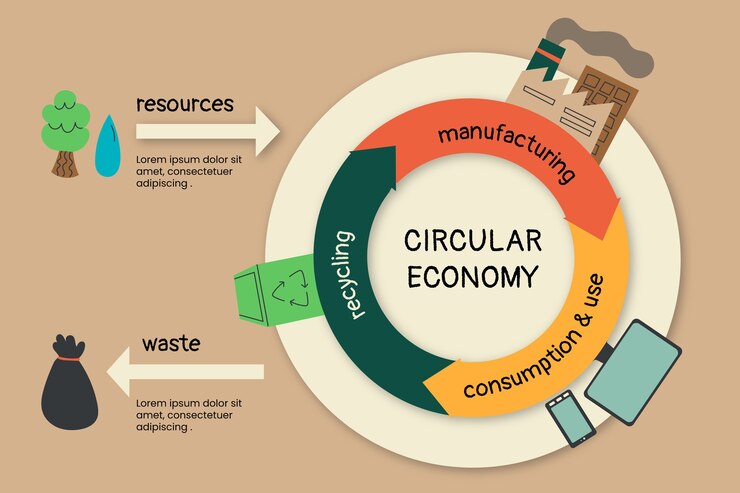
Did you know that for every dollar you spend on a product, you are often paying a “hidden tax” for its eventual disposal? In our current linear economy, waste management is treated as a public burden. When a company produces a non-recyclable plastic toy or a complex piece of e-waste, they keep the profit, but you (the taxpayer) pay for the truck that hauls it away and the landfill that buries it. This “Externalized Waste” model is the primary reason our oceans are filled with plastic and our landfills are overflowing.
Extended Producer Responsibility (EPR) is the legal mechanism designed to end this systemic unfairness. It is a policy approach where a manufacturer’s responsibility for a product extends to the post-consumer stage of a product’s life cycle. This guide provides a strategic roadmap for understanding this shift, detailing how EPR affects consumers, exploring the profound benefits of Extended Producer Responsibility, and teaching you how to support producer accountability to force a move toward sustainable brand practices.
I. Ending the “Free Ride” for Waste (The OREO Framework)
We must move from a society that “cleans up after brands” to a society where “brands clean up after themselves.”
The Problem of Disconnected Design
Extended Producer Responsibility is the single most important legal tool for the transition to a circular economy because it finally aligns a brand’s financial incentives with product durability.
In a linear world, a company makes more money if their product breaks quickly (Planned Obsolescence). Why? Because they don’t have to deal with the broken item, and they get to sell you a new one. But under EPR for consumers and producers, the brand is legally or financially responsible for the “End-of-Life” costs. If a product is hard to recycle or short-lived, the brand’s disposal costs go up. If a product is durable, easy to repair, and 100% recyclable, their costs go down. EPR turns “Waste” from an “External Problem” into an “Internal Expense.”
In many European countries and several US states (like Maine and Oregon), EPR laws for packaging require companies to pay into a fund based on the amount of packaging they produce. A company using a “Monstrous Hybrid” of plastic and foil pays a high fee. A company using 100% recycled, home-compostable cardboard pays a very low fee. The result? Companies are racing to redesign their packaging to save money, and the consumer gets a waste-free experience.
Therefore, understanding product stewardship laws is essential for every conscious consumer—EPR is the “Invisible Hand” that is finally pushing the market toward true circularity.
II. How Does EPR Affect Consumers?
You might not see “EPR” on a price tag, but its effects are transforming your shopping experience and your household budget.
1. The “Design for Repair” Shift
Because brands want to avoid the cost of total replacement, EPR encourages the creation of repairable products. You will notice more “Modular” designs and the availability of official spare parts.
2. Lower Municipal Taxes
As Extended Producer Responsibility laws shift the cost of recycling from the city to the producers, municipal waste management budgets can be redirected toward schools, parks, and infrastructure. Your tax dollars stop subsidizing corporate waste.
3. Incentivized Take-Backs
EPR leads to a massive increase in brands with take-back programs. You will see more “Trade-in for Credit” offers as brands scramble to recover the high-value materials (technical nutrients) they are now legally responsible for managing.
III. Benefits of Extended Producer Responsibility
Why is producer accountability the key to a sustainable future?
- Material Innovation: EPR creates a multi-billion dollar incentive for chemists to invent new “biological nutrients” that can return safely to the earth.
- Toxic Reduction: When a company has to manage the recycling of a circuit board, they are much more likely to remove lead, mercury, and flame retardants during the design phase to keep their recycling costs low.
- Leveling the Playing Field: EPR prevents “bad actors” from undercutting ethical brands. In a linear world, the company that ignores waste is the cheapest. In an EPR world, the company that prevents waste is the most profitable.
IV. Understanding Product Stewardship Laws in 2026
Where is this happening, and how do you spot it?
- Electronics (E-Waste) Laws: Most US states now have EPR-style laws for TVs and computers. This is why you can often drop these items at retail locations for free.
- Packaging EPR: This is the new frontier. States like California and Colorado have passed landmark laws that will phase out non-recyclable packaging by 2030.
- Textile EPR: New York and the EU are currently drafting laws that would make clothing brands responsible for the 80 lbs of textile waste the average person generates annually.
V. The Strategic ROI: Consumer Savings via EPR
| Product Category | Pre-EPR Reality | Post-EPR (Circular) Reality | Your Savings |
| Appliances | Paid “Haul Away” Fee ($50) | Free Brand Take-Back | $50.00 |
| Paint/Chemicals | Toxic Waste Hazard | Free Local Drop-off | Safety + Disposal Fees |
| Batteries | Household Trash | Retail Recycling Rewards | $5-10 Credit |
- Total Cost of Ownership: Under EPR, the “Disposal Cost” is increasingly baked into the producer’s business model, not your weekend chores.
VI. How You Can Support Circular Economy Legislation
Advocacy is the final step in the circular journey.
- Demand Transparency: Ask brands: “What is your EPR strategy? Where do your products go when I’m done with them?”
- Support Local Legislation: When your city or state proposes an “Extended Producer Responsibility” bill for plastics or textiles, write to your representative.
- Vote with your Wallet: Prioritize brands with take-back programs. Your purchase is the “market data” that proves EPR is what consumers want.
Conclusion: The Circle is Closing
For 150 years, the industrial world has operated on the myth that “Waste” is a normal byproduct of life. Extended Producer Responsibility proves that waste is actually just a lack of accountability.
How EPR affects consumers is fundamentally positive—it leads to better products, lower public costs, and a cleaner environment. By embracing producer accountability and understanding the benefits of Extended Producer Responsibility, you are witnessing the end of the “Throwaway Age.” The responsibility has shifted. The loop is closing. And for the first time since the Industrial Revolution, the person who makes the mess is finally the one who has to clean it up.
About the Author