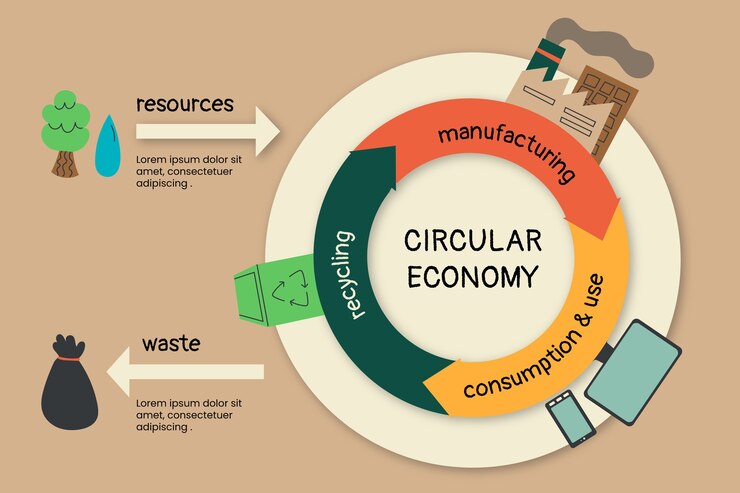
Did you know that in a traditional linear city, over 70% of the carbon footprint is tied to the consumption of goods produced elsewhere? We often think of “sustainability” as a global problem requiring global solutions, but the most effective intervention happens at the neighborhood level. When a community decides to share its tools, repair its electronics, and recirculate its textiles, it stops being a “consumer of resources” and starts being a “manager of capital.”
Starting a community circular economy initiative is the most direct way to build local sustainability initiatives that provide immediate economic relief to residents. By moving from a “buy-and-discard” model to a “repair-and-share” model, you are not just saving the planet—you are insulating your neighborhood from global supply chain disruptions. This guide provides a strategic roadmap for how to start a community circular economy project, exploring funding for local circular initiatives, and teaching you the art of building community support for sustainability.
I. The Resilience of the Hyperlocal Loop
We must stop waiting for national policy and start building neighborhood infrastructure.
The Problem of the “Distance Penalty”
A community circular economy initiative is the only way to eliminate the “distance penalty”—the carbon and financial cost of moving resources back and forth over thousands of miles.
The linear economy thrives on centralization; it wants your “waste” to be hauled to a distant landfill and your “new goods” to be shipped from a distant factory. This creates a massive energy leak in our communities. When you launch local sustainability initiatives, you keep the resources (and the money) within a three-mile radius. This “Hyperlocalism” is the ultimate insurance policy. It turns neighbors into a supply chain and local skills into an economy. The linear model wants you to be an isolated buyer; the circular model requires you to be an integrated partner.
A community starts a “Repair Cafe” and a “Tool Library”. Instead of 100 people buying 100 new toasters and drills from an international conglomerate, they repair the 40 they have and share 10 high-quality community-owned ones. The 5,000 that would have left the community stays in residents’ pockets, and the neighborhood builds a “knowledge map” of who can fix what.
Therefore, starting a circular project at the neighborhood level is the most radical economic act a citizen can perform—it restores power and wealth to the places where people actually live.
II. How to Start a Community Circular Economy Project
Launching a successful community circular economy initiative requires a balance of “Social Capital” and “Technical Infrastructure.”
1. The “Asset Mapping” Phase
Before you build anything, find out what your community already has.
- Material Assets: Are there underused basements, church halls, or vacant storefronts?
- Skill Assets: Who are the retired engineers, seamstresses, and carpenters in your neighborhood?
- Resource Leaks: What is currently being thrown away in high volumes? (e.g., if everyone is discarding old denim, start a denim upcycling hub).
2. Choosing Your “Lead Loop”
Don’t try to build a “Circular City” on day one. Start with one high-utility project to build community support for sustainability.
- Repair Cafes: Low barrier to entry. Just a space, some tools, and volunteer “fixers.”
- Tool Libraries: High utility but requires more tracking infrastructure (Article ID 77).
- Community Composting: Perfect for urban areas with high food waste.
3. Legal and Governance Structure
Decide if you will operate as a “Non-Profit,” a “Community Interest Company (CIC),” or a “Cooperative.” A cooperative model is often best for starting a circular project because it ensures every member has a stake in the initiative’s success.
III. Funding for Local Circular Initiatives
How do you pay for the initial tools, insurance, and rent? In 2026, the funding landscape for circularity has expanded significantly.
- Municipal Grants: Many cities now have “Zero Waste” or “Climate Action” budgets specifically for local sustainability initiatives.
- Community Crowdfunding: Platforms like Spacehive or GoFundMe work well for circular projects because the “investors” are the future “users.”
- The “Membership” Model: Instead of charging per tool or per repair, charge a low annual fee (e.g., 50) for “Access to the Commons.” This provides predictable, recurring revenue.
- Corporate Sponsorship: Local businesses often want to fund “ESG” (Environmental, Social, and Governance) projects. A local hardware store might donate the initial stock for a tool library in exchange for branding.
IV. Building Community Support for Sustainability
The biggest barrier to circularity isn’t technology; it’s behavior.
- Lead with the “Wallet,” Not the “Wait”: Don’t just talk about “saving the planet.” Talk about “saving 200 on a new vacuum” or “free access to a 500 table saw.” Economic benefits drive adoption; environmental benefits drive loyalty.
- Make it Social: A community circular economy initiative should feel like a party, not a lecture. Use music, food, and storytelling at your repair events.
- The “Success” Visibility: Use a “Waste Diverted” counter at your events. Seeing a live tally of “1,200 lbs of gear kept out of landfills” creates a powerful sense of collective achievement.
V. The Strategic ROI of a Circular Neighborhood
| Initiative | Initial Setup Cost | Annual Value to Community | Circular ROI (Year 1) |
| Tool Library | 5,000 | 25,000 (Avoided Purchases) | 500% |
| Monthly Repair Cafe | 500 (Insurance/Tea) | 12,000 (Avoided Replacements) | 2,400% |
| Community Swap | 0 | 5,000 (Material Redistribution) | Infinite |
- Social ROI: Lowered crime rates (due to increased neighborhood trust) and reduced social isolation among elderly “fixers.”
- Environmental ROI: A single neighborhood-scale community circular economy initiative can divert 5-10 tons of high-value material from landfills annually.
VI. Circular City Strategies: Scaling Up
Once your neighborhood loop is closed, how do you connect to the larger city?
- The “Hub and Spoke” Model: A central “Repair Warehouse” supports smaller, neighborhood-scale “Repair Kiosks.”
- Partnership with Waste Management: Work with the city to intercept “Hard-to-Recycle” items (Article ID 69) before they reach the landfill.
- Digital Integration: Use a shared app (like myTurn) so residents can see the inventory of every tool library in the city.
Conclusion: The Power of the Neighborhood
The circular economy is not a corporate trend; it is a community-led revolution. Starting a community circular economy initiative is how we reclaim our autonomy from a linear system that views us only as “units of consumption.”
How to start a community circular economy project is the most important skill you can learn in 2026. By securing funding for local circular initiatives and building community support for sustainability, you are doing more than recycling—you are redesigning the world, one block at a time. The loop is waiting for a leader. Will it be you?
About the Author