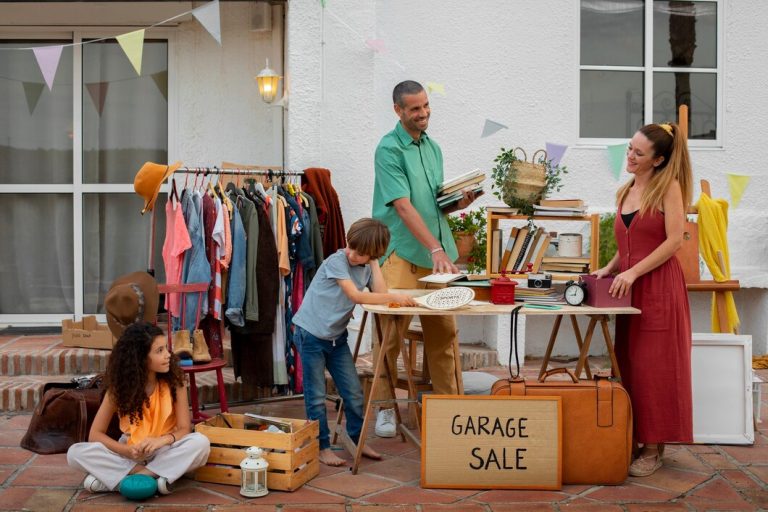
Did you know that the average household is a “stagnant reservoir” of untapped capital? Research suggests the typical home contains over 2,100 worth of unused goods—from electronics and designer clothing to kitchen gadgets and furniture. In a linear economy, these items are eventually “purged” into a landfill or a donation bin where they may or may not find a second life. In a circular economy, these items are “technical nutrients” that must be kept in the loop. By mastering selling on second-hand platforms, you don’t just clear your clutter; you act as a vital redistributor of resources, ensuring that products reach users who actually need them.
The difference between an item sitting for six months and a “sold” notification within 24 hours lies in your execution. This guide provides a strategic roadmap for maximizing resale value, detailing how to take great photos for second-hand sales, mastering the pricing strategy for used items, and writing high-converting product descriptions. Whether you are using Facebook Marketplace, eBay, Poshmark, or Depop, these quick sales tips will turn your unused assets into liquid capital.
I. Resale as the Highest Form of Recovery (The OREO Framework)
We must shift our perspective: your “old stuff” is someone else’s “new resource.”
The Problem of the Stagnant Closet
Choosing to resell an item rather than recycling or discarding it is the most environmentally impactful decision a consumer can make.
Recycling is energy-intensive; it involves breaking a product down to its raw elements. Reselling, however, preserves the “embodied energy” of the item. It avoids the 100% of the carbon footprint associated with manufacturing a new equivalent for the buyer. When you facilitate a sale, you are preventing a “linear purchase” elsewhere. The circular economy relies on high-velocity redistribution to reduce the global demand for virgin materials.
A consumer has a high-end blender they no longer use. They could let it sit in a cupboard (stagnant loop) or drop it at a recycler (energy-intensive recovery). Instead, they use a strategic eBay selling strategy. A buyer in the next state—who was about to buy a new 200 blender—buys this used one for 85. The buyer saves 115, the seller earns 85, and the planet is spared the mining, manufacturing, and shipping of a brand-new appliance.
Therefore, selling on second-hand platforms is not just “extra cash”; it is an act of industrial stewardship that maximizes the lifespan of our most resource-heavy goods.
II. How to Take Great Photos for Second-Hand Sales
In the digital secondary market, your photos are your “trust metric.” Buyers cannot touch the item, so they must “feel” its quality through your lens.
1. The “Golden Hour” Lighting
Natural light is non-negotiable. Avoid using a camera flash, which creates harsh glares and distorts colors.
- The Setup: Place your item near a large window during the day.
- The Result: Accurate color representation and visible textures, which reduces the likelihood of “Item Not as Described” returns.
2. The “360-Degree” Rule
Do not hide flaws. Transparency builds the trust required for quick sales tips.
- Photos Required: Front, back, sides, and the manufacturer’s label/tag.
- The “Flaw Close-up”: If there is a scratch or a pill, take a macro photo of it. Buyers appreciate honesty and are more likely to buy a “flawed but described” item than a “suspiciously perfect” one.
3. Contextual Staging
- Clothing: Use a clean hanger against a neutral wall or a “flat lay” on a tidy floor.
- Furniture: Clear the clutter around the piece. A photo of a chair in a messy garage sells for 30% less than a photo of the same chair in a clean, well-lit corner.
III. Pricing Strategy for Used Items: Finding the Sweet Spot
Pricing is a delicate balance between maximizing resale value and ensuring the item moves quickly.
- The “Sold” Filter Hack: On eBay or Poshmark, never look at what people are asking. Filter your search by “Sold Items.” This shows the actual market clearance price.
- The 50-25-10 Rule:
- 50% of Retail: For items in “Like New” condition.
- 25% of Retail: For items with visible wear but full functionality.
- 10% of Retail: For items that need minor repair or are highly “dated.”
- Psychological Pricing: Pricing an item at 19 instead of 20 can significantly increase the click-through rate on high-velocity platforms like Facebook Marketplace.
IV. Writing High-Converting Product Descriptions
Your description should answer every question a buyer might have before they even ask it.
The “Anatomy” of a Perfect Listing:
- The Title: Include the Brand, Model, Color, and Size. (e.g., “Patagonia Better Sweater Fleece, Navy, Men’s Medium”).
- The “Why am I selling?”: “Upgraded to a new model” or “Doesn’t fit my new space” adds a human element and removes the suspicion that the item is “broken.”
- Key Measurements: For clothing, provide “Pit-to-Pit” and “Length.” For furniture, provide Height, Width, and Depth.
- Keywords for Search: Include terms like “sustainable,” “vintage,” or “minimalist” to catch specific search intents.
V. Platform Selection: Poshmark vs Depop vs eBay
Choosing the right platform is critical for quick sales tips.
| Platform | Best For | Audience | Fees |
| Facebook Marketplace | Furniture / Heavy Items | Local Buyers | 0% (Cash/Local) |
| eBay | Collectibles / Electronics | Global / Specialized | ~13% |
| Poshmark | Mid-to-High End Fashion | Adult / Professional | 20% |
| Depop | Vintage / Streetwear | Gen Z / Trendy | 10% |
- The Local Advantage: For furniture, Facebook Marketplace tips suggest always offering “local pickup only” to avoid the logistics and carbon cost of shipping large items.
VI. The ROI of the Resale Habit
| Item | Purchase Price (Original) | Resale Value | Circular Dividend (Cash + Savings) |
| Designer Handbag | 300.00 | 180.00 | 180.00 Cash |
| Previous Gen iPhone | 800.00 | 350.00 | 350.00 Cash |
| Solid Wood Desk | 250.00 | 100.00 | 100.00 Cash |
- Tax-Free Income: In many jurisdictions, selling your used personal items for less than you paid for them is not considered taxable income—it is “capital recovery.”
- Clutter-Free Mental ROI: The psychological benefit of an organized, “zero-waste” home is often more valuable than the cash itself.
Conclusion: The Velocity of the Loop
The circular economy only works if materials keep moving. When you master selling on second-hand platforms, you are the engine of that movement.
How to take great photos for second-hand sales and implementing a smart pricing strategy for used items are the two skills that separate the “cluttered” from the “circular.” Don’t let your valuable assets rot in a closet or a garage. Release them back into the market, recoup your capital, and ensure that every product you own serves its full potential until the very end of its mechanical life.
About the Author