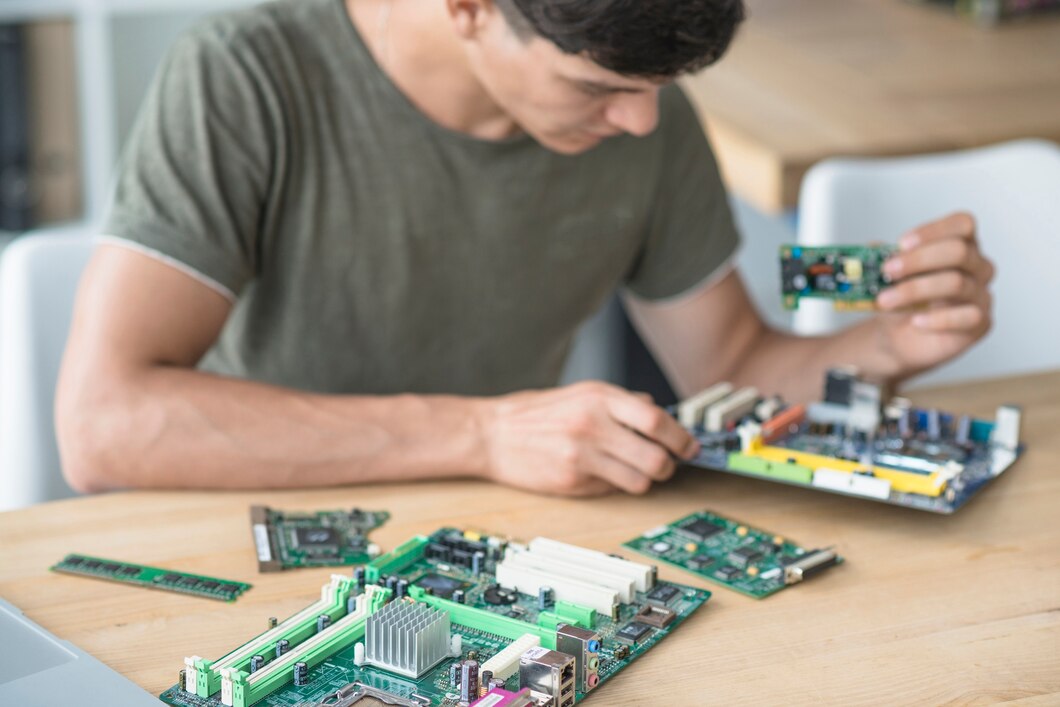
Did you know that “Urban Mining”—the process of extracting resources from discarded electronics—is significantly more efficient than traditional mining? It is estimated that there is up to 80 times more gold in one ton of circuit boards than there is in one ton of gold ore extracted from the earth. Yet, globally, we produce over 50 million metric tons of e-waste every year, and only 20% of it is formally recycled. In a linear economy, a broken printer is “junk.” In a circular economy, that same printer is a treasure chest containing high-precision stepper motors, optical sensors, and specialized power supplies.
Electronics parts harvesting is the high-tech frontier of upcycling. It moves beyond the “shredding” model of recycling and focuses on “component recovery.” By mastering the art of salvaging electronics, you reclaim the high-embedded energy and rare earth minerals found in modern devices. This guide provides a strategic roadmap for e-waste repurposing, detailing how to salvage electronic parts from old appliances, outlining the essential tools for electronics parts harvesting, and providing the safe ways to harvest electronics components to power your next innovation.
I. Urban Mining: The Efficiency of the Second Life (The OREO Framework)
We must stop viewing e-waste as a “disposal problem” and start viewing it as a “high-grade mineral deposit.”
The Problem of the Crushed Component
Opinion: Shredding and smelting electronics for raw metals (traditional recycling) is a primitive and wasteful use of resources compared to direct electronics parts harvesting.
Reason: When an electronic device is shredded, we lose the “functional value” of the components. A microchip or a motor represents thousands of hours of engineering and highly complex manufacturing. While smelting recovers the copper and gold, it destroys the function. Salvaging the component allows it to perform its job in a second or third device without any additional manufacturing energy. The linear model wants you to buy a new 15 sensor; the circular model asks why you aren’t harvesting the five sensors already inside your discarded microwave.
Example: A hobbyist wants to build a small CNC machine. They could buy three new stepper motors for 60. Instead, they find two discarded office printers on the curb. Through salvaging electronics, they extract two high-quality NEMA motors and several optical end-stops. The motors are perfectly functional, they saved 60, and they prevented the carbon-intensive manufacturing and shipping of new motors from halfway across the world.
Opinion/Takeaway: Therefore, electronics parts harvesting is the most sophisticated form of circular stewardship—it preserves the highest state of utility for our most complex technical nutrients.
II. How to Salvage Electronic Parts from Old Appliances
Not all e-waste is created equal. To be successful in e-waste repurposing, you must know which devices contain the highest-value “harvest.”
1. The Printers and Scanners (The Motor Goldmine)
Printers are the “Holy Grail” for makers. They contain:
- Stepper Motors: High-precision motors for robotics and 3D printers.
- Optical Sensors: Perfect for “object detection” projects.
- Steel Rods: High-quality, ground steel shafts for mechanical builds.
2. Microwaves and Toaster Ovens (High Power)
- High-Voltage Transformers: (WARNING: Requires extreme caution).
- Cooling Fans: Durable, high-airflow fans for electronics cooling.
- Turntable Motors: High-torque, low-speed motors.
3. Old Laptops and Power Bricks
- Lithium-Ion Cells: Often, a “dead” laptop battery only has one bad cell; the others can be harvested for power banks or flashlights.
- LCD Screens: Can be converted into external monitors with a cheap controller board.
- High-Quality Screws: You will never have to buy tiny M2 or M3 screws again.
III. Tools for Electronics Parts Harvesting
To move beyond “smashing” and into “harvesting,” you need a specific kit to protect the delicate components during extraction.
- Precision Screwdriver Set: Including Torx, Security Hex, and Tri-wing bits. Manufacturers use “security” bits to discourage repair; a good set bypasses this barrier.
- Soldering Iron and Desoldering Pump (Solder Sucker): To remove through-hole components like capacitors and resistors from circuit boards.
- Flush Cutters: For snipping wires and component leads cleanly.
- Multimeter: Essential for testing salvaged parts to ensure they are still functional before you integrate them into a new project.
- Organization Trays: Use an old egg carton or an ice cube tray to sort harvested screws and small components by device.
IV. Safe Ways to Harvest Electronics Components
Safety is the absolute priority when dealing with salvaging electronics. Many components store energy even when unplugged.
1. The Capacitor Danger
Large capacitors (found in TVs, microwaves, and power supplies) can hold a lethal electrical charge for days.
- The Rule: Always discharge capacitors using a high-wattage resistor before touching the board. Never “short” them with a screwdriver, as this can damage the component and cause a spark.
2. Avoiding Hazardous Materials
- Mercury: Older flat-screen monitors (CCFL backlit) contain small amounts of mercury vapor in the lamps. If a bulb is broken, leave the room and ventilate.
- Lead: Older electronics used lead-based solder. Always wash your hands after electronics parts harvesting and work in a well-ventilated area.
3. Battery Handling
Never puncture or crush a Lithium-Ion battery. If a battery is swollen (“pillowed”), do not attempt to harvest the cells; take the entire unit to a professional e-waste facility.
V. Strategic ROI: The Economics of the Salvage
| Salvaged Component | Retail Cost (New) | Harvesting Time | Circular ROI |
| NEMA Stepper Motor | 20.00 | 10 Minutes | 20.00 |
| 12V 5A Power Supply | 15.00 | 2 Minutes | 15.00 |
| High-Brightness LEDs (10) | 5.00 | 5 Minutes | 5.00 |
| Cooling Fan (80mm) | 10.00 | 2 Minutes | 10.00 |
- Zero-Cost Prototyping: Harvesting allows you to experiment with robotics and electronics without the “fear of breaking” expensive new parts.
- Legacy Support: Often, the only way to fix an old piece of equipment is by salvaging electronics from an identical discarded unit, as the parts are no longer manufactured.
VI. Why “Part Harvesting” is the Future of Manufacturing
In a truly circular economy, products are designed for “Disassembly” (DfD). Until that becomes the global standard, electronics parts harvesting is the bridge. It is the community-led response to “Planned Obsolescence.”
By choosing e-waste repurposing, you are participating in a global movement of “Maker-Stewardship.” You are proving that the value of a device isn’t determined by its warranty status, but by the physical reality of the atoms and engineering it contains.
Conclusion: The Treasure in the Trash
The “dead” gadget in your drawer is not a corpse; it is a donor. It contains the high-tech organs required to bring a new invention to life.
How to salvage electronic parts from old appliances is a skill that turns you from a consumer of technology into a master of it. By using the right tools for electronics parts harvesting and following safe ways to harvest electronics components, you reclaim the gold, the copper, and the genius of the modern world. Don’t let these resources be crushed in a landfill—harvest them, hack them, and keep the spark of innovation circulating.
About the Author