Did you know that glass is 100% recyclable and can be recycled endlessly without loss in quality, yet the energy required to melt down a glass jar and manufacture a new one is nearly 40% higher than the energy required to simply wash and reuse it? In a linear economy, we celebrate recycling as the ultimate solution. In a circular economy, we recognize that “reuse” is the far more powerful sibling. Every time you toss a thick, durable pasta sauce jar into the recycling bin, you are participating in an energy-intensive industrial process that could have been avoided with a bit of warm water and a splash of vinegar. Glass jar upcycling is the easiest entry point into a zero-waste lifestyle.
Because glass is non-porous and chemically inert, it is the perfect material for sustainable home organization. This guide provides a strategic roadmap for repurposing glass containers, detailing how to find creative ways to reuse glass jars, mastering the frustrating task of how to remove labels from glass jars, and exploring DIY glass projects that turn kitchen waste into high-end home decor.
I. The Energy Efficiency of Reuse (The OREO Framework)
Industrial recycling is a safety net, but “Direct Reuse” is the high-wire act of true sustainability.
The Problem of the Energy-Intensive Loop
Opinion: Systematically recycling glass jars instead of upcycling them for domestic use is a failure of energy conservation and resource management.
Reason: Industrial glass recycling requires crushing glass into “cullet” and heating it to over 2,700°F (1,500°C). While this is better than using virgin sand, it still creates a massive carbon footprint. When you perform glass jar upcycling at home, you bypass the entire transportation, sorting, and smelting infrastructure. You are essentially “recycling” the energy already embedded in the glass, keeping the material in its highest-value state with near-zero energy input.
Example: A consumer buys a high-end jar of coconut oil. When finished, they spend five minutes removing labels from glass jars and use it to store bulk-bought lentils. In the linear/recycling model, that jar would have traveled 200 miles to a facility, been melted down, and reformed—likely into a bottle of lower value. The circular consumer saved that energy and avoided the purchase of a new plastic storage container.
Opinion/Takeaway: Therefore, repurposing glass containers is the most energy-efficient act a citizen can perform, moving beyond the “recycling myth” toward a truly restorative, low-carbon household.
II. The Master Skill: How to Remove Labels from Glass Jars
The biggest barrier to glass jar upcycling isn’t a lack of imagination; it’s the sticky, unsightly residue left behind by industrial adhesives.
The Three-Step Residue-Free Method:
- The Hot Soak: Submerge the jar in hot (not boiling) water with a squirt of dish soap for 20 minutes. Most paper labels will slide off.
- The Oil-Baking Soda Paste: For the stubborn “plastic-feel” labels or sticky residue, mix equal parts baking soda and any cooking oil. Apply the paste to the residue and let it sit for 10 minutes.
- The Scrub: Use a scrub pad or the back of a sponge to wipe away the paste. The oil dissolves the adhesive, and the baking soda acts as a gentle abrasive. Wash with soap once more for a crystal-clear finish.
III. Creative Ways to Reuse Glass Jars for Storage
Upcycling glass food containers for home decor and storage works best when you categorize your jars by size and shape.
1. The Pantry Revolution (Apothecary Style)
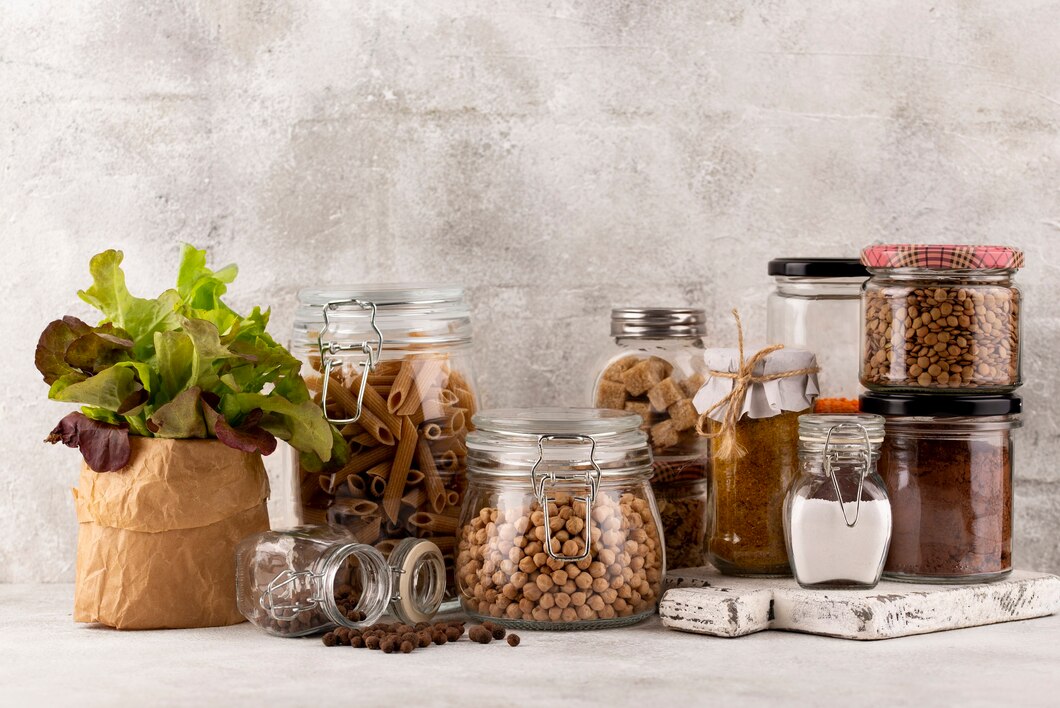
Standardized glass jars are the hallmark of sustainable home organization.
- Wide-Mouthed Jars (Pickle/Mayonnaise): Perfect for flour, sugar, and pasta. They allow for easy scooping and keep pests out.
- Small Jars (Baby Food/Pesto): Ideal for a uniform spice rack. Paint the lids with chalkboard paint for a high-end, cohesive look.
2. The Bathroom & Vanity Organizer
- Tall Jars (Olive/Asparagus): These are perfect for makeup brushes, toothbrushes, or cotton swabs.
- Frosted Glass DIY: Apply a “frosting” spray paint to the outside of the jar to hide the contents while maintaining a clean, minimalist aesthetic.
IV. DIY Glass Projects: Moving from Storage to Decor
If you want to move beyond simple storage, upcycling glass food containers for home decor allows you to create artisanal pieces for a fraction of the retail cost.
Project 1: The Tinted Sea Glass Vase
- Materials: Clear glass jar, Mod Podge, and food coloring.
- Process: Mix a few drops of blue/green food coloring into the Mod Podge. Coat the inside of the jar and let it dry.
- Outcome: You get a beautiful, translucent “sea glass” effect that rivals expensive boutique vases.
Project 2: The Mason Jar Terrarium (Bio-Circular)
- Design: Use a large, wide-mouthed jar. Layer small pebbles, charcoal, and potting soil.
- Creation: Plant small succulents or moss. The glass acts as a mini-greenhouse, creating a self-sustaining ecosystem.
Project 3: The Hanging Lantern
- Materials: Glass jar and copper wire.
- Construction: Wrap the wire around the neck of the jar to create a handle. Place a tea light or LED string lights inside.
- Utility: Perfect for sustainable outdoor lighting that is weather-resistant and beautiful.
V. Strategic ROI: The Economics of Glass Reuse
| Storage Need | Retail Plastic Cost | Upcycled Glass Cost | Circular ROI |
| Spice Jar Set (12) | 24.00 | 0.00 (Yogurt/Pesto jars) | 24.00 |
| Pantry Canisters (5) | 60.00 | 0.00 (Pasta/Pickle jars) | 60.00 |
| Decorative Vase | 35.00 | 2.00 (Paint/Adhesive) | 33.00 |
- Zero-Waste Shopping: Many “refill” stores allow you to bring your own glass jars.1 Since glass is heavier than plastic, you save money over time by not paying for the weight of the packaging.
- Health Value: Unlike plastic, glass does not leach BPA or phthalates into your food, especially when storing acidic items like tomato sauce or lemon juice.2
VI. Why Circular Upcycling Protects the “Technical Nutrient”
In the circular economy, glass is a “technical nutrient.” It belongs in a closed loop. However, when we break glass jars for recycling, we lose the “formed value” of the jar. The jar has already been shaped into a useful object; why destroy that shape only to spend energy forming it again?
Glass jar upcycling preserves the object’s form. By choosing to repurpose glass containers, you are validating the work that went into creating that specific shape, whether it’s a tall, elegant vinegar bottle or a stout, sturdy honey jar.
Conclusion: The Clear Path Forward
The glass jar in your hand is not trash; it is a high-performance, durable storage vessel that just happens to currently be covered in a marketing label.
How to remove labels from glass jars is the only “gatekeeper” skill you need to master. Once the glass is clear, the possibilities of DIY glass projects and sustainable home organization are endless. By embracing glass jar upcycling, you transform your relationship with waste, turning your kitchen from a source of landfill-bound glass into a source of beautiful, functional assets for your home.
About the Author